The problem
Most group planning breaks down before the logistics are even interesting. Someone asks when everyone is free. The answer scatters across a group chat, reactions, a spreadsheet, and a poll designed around hours instead of days.
DayBingo starts with a narrower question: which day works?
Cabin weekend
When can everyone make it?
One link. Four answers. The overlap is the answer.
The interaction
Make a calendar. Share one link. Call bingo.
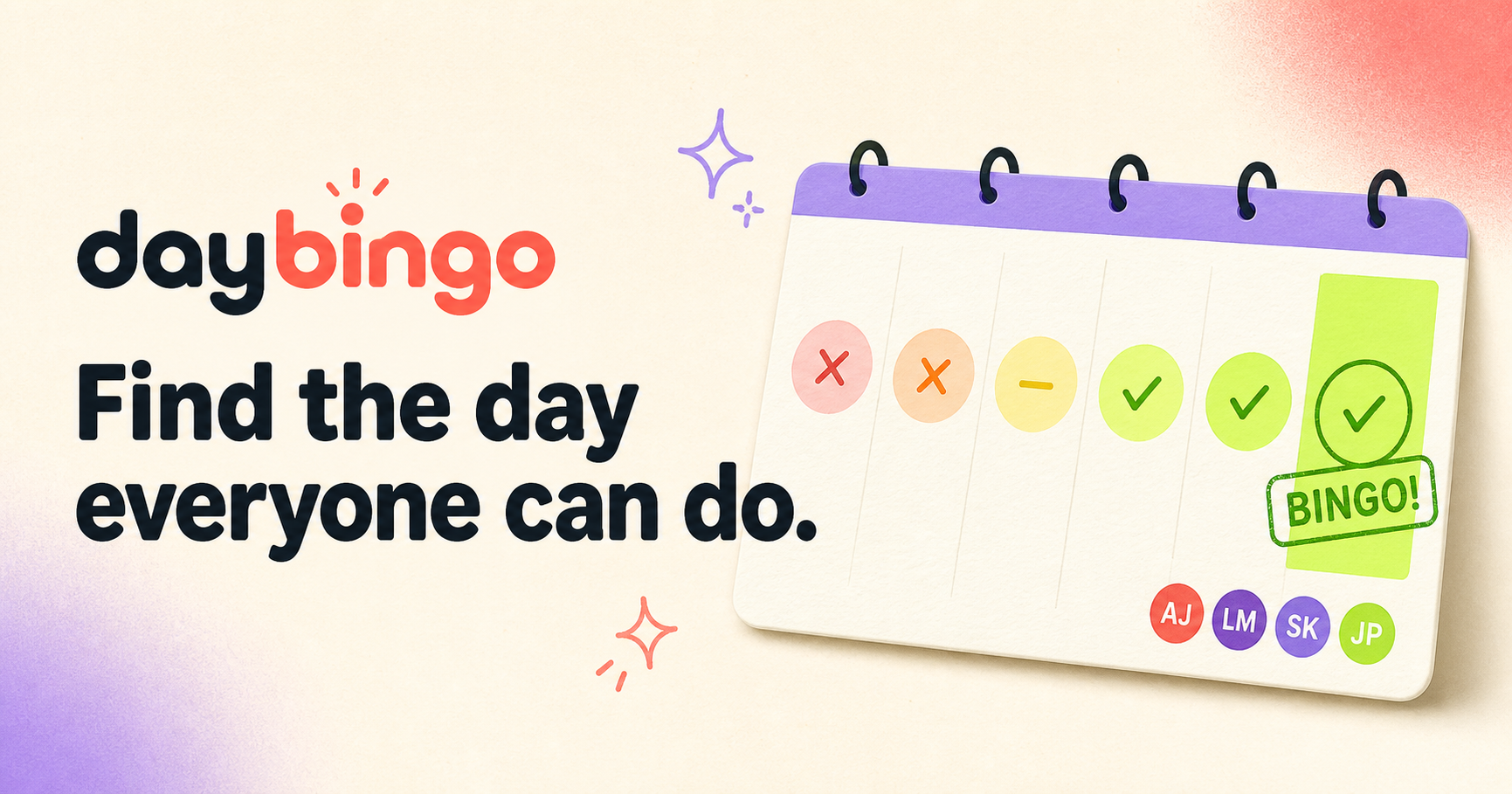
An organizer chooses the possible dates and sends an unguessable event link. Everyone enters a name and taps the days they can make. The shared calendar becomes a heat map as responses arrive. A date that works for everyone is bingo.
No account, email address, installation, or calendar permission is required.
Name the plan, choose the range, and decide which weekdays count.
Pass around a hard-to-guess URL. Nobody has to sign up first.
Availability aggregates in one view until the best date becomes obvious.
Product judgment
The most important features are the ones it does not have.
DayBingo schedules dates, not meetings. There is no hourly grid, calendar synchronization, booking workflow, or account system. Optional rankings and group preferences can settle the remaining details, but they stay downstream of the central question.
Deliberate constraints
Behind simple
Simplicity moves the work. It does not remove it.
A no-account product still needs unguessable identifiers, rate limits, retention controls, abuse resistance, clear shared ownership, and hardened public APIs. DayBingo handles those concerns behind an interface intentionally designed to feel like almost nothing.
It was built with React and TypeScript, runs on Cloudflare, and stores events in D1. The product was designed, launched, and hardened as a fully owned Klein Labs product in August 2026.
Status
Live, free, and deliberately small.
DayBingo is available now. Create a calendar in about twenty seconds, share it with a group, and stop negotiating dates in the group chat.
Create a DayBingo ↗