The premise
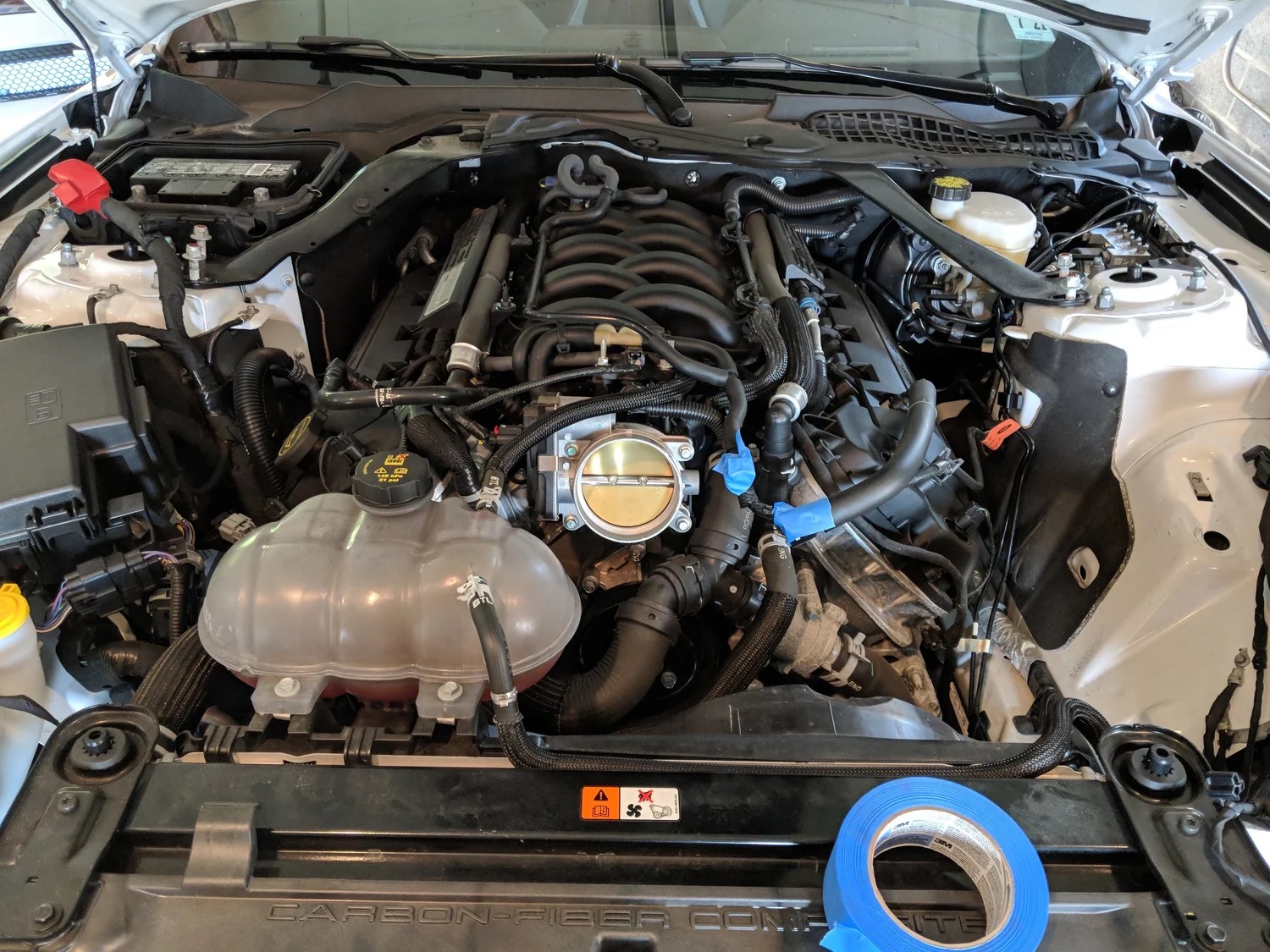
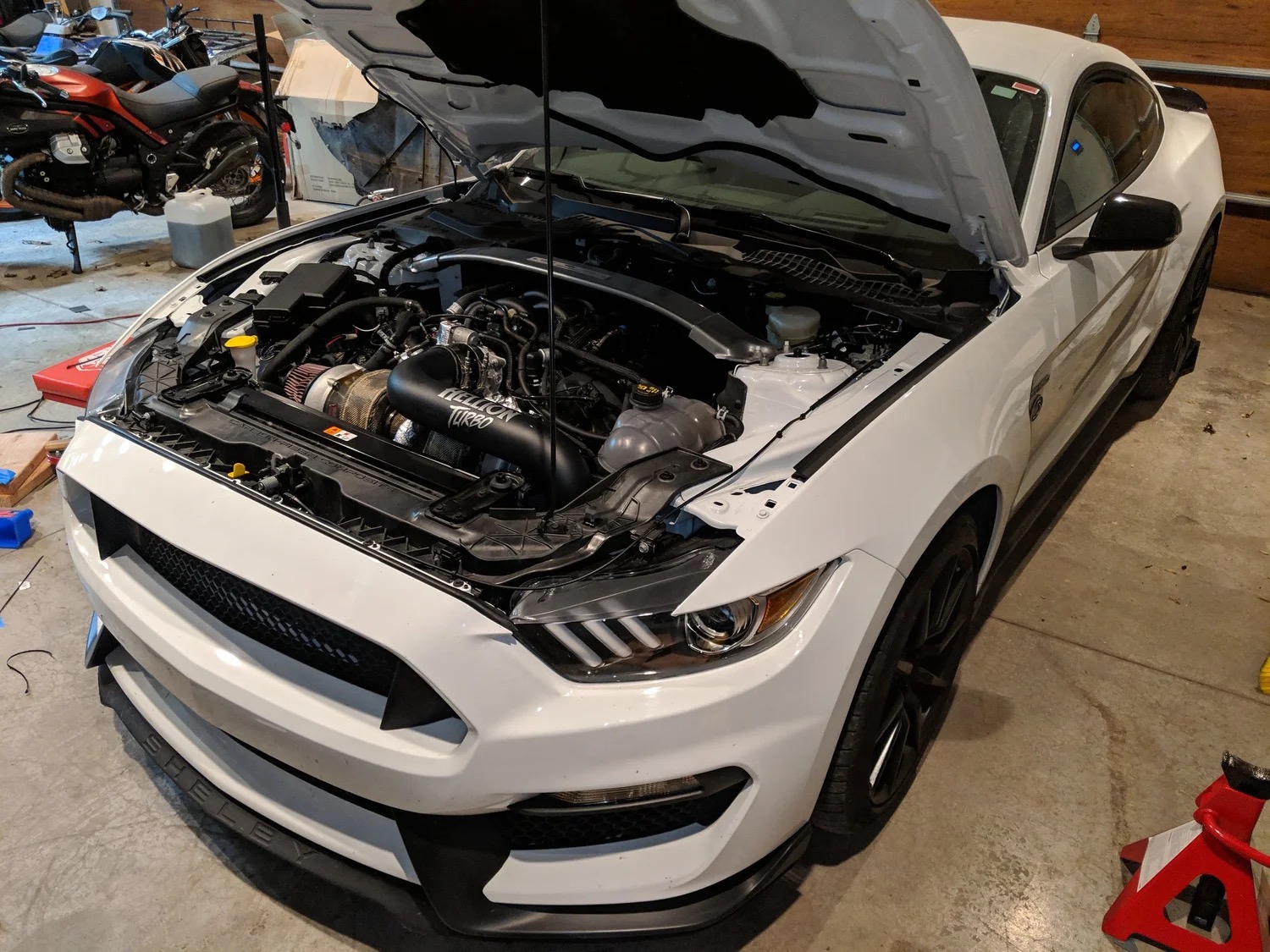
In late 2018, I decided a 2016 Shelby GT350 needed two turbos.
It was my first turbo build since a DSM nearly fifteen years earlier. The goal was not a dyno queen. It was a clean, controllable 93-octane street setup that kept the character of the GT350 and made a little over 700 horsepower at the wheels on 8 psi.
The install
The kit was the beginning, not the build.
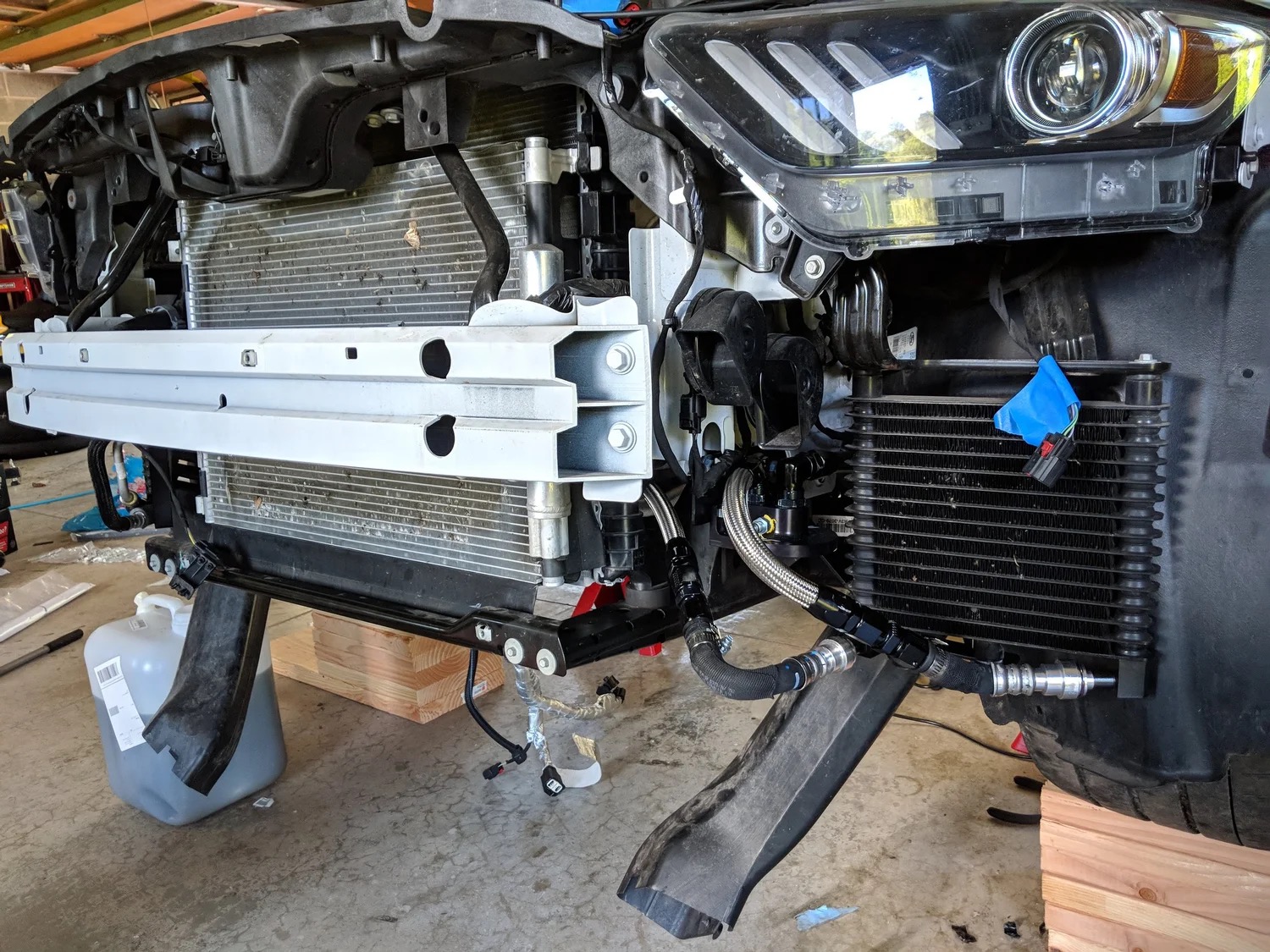
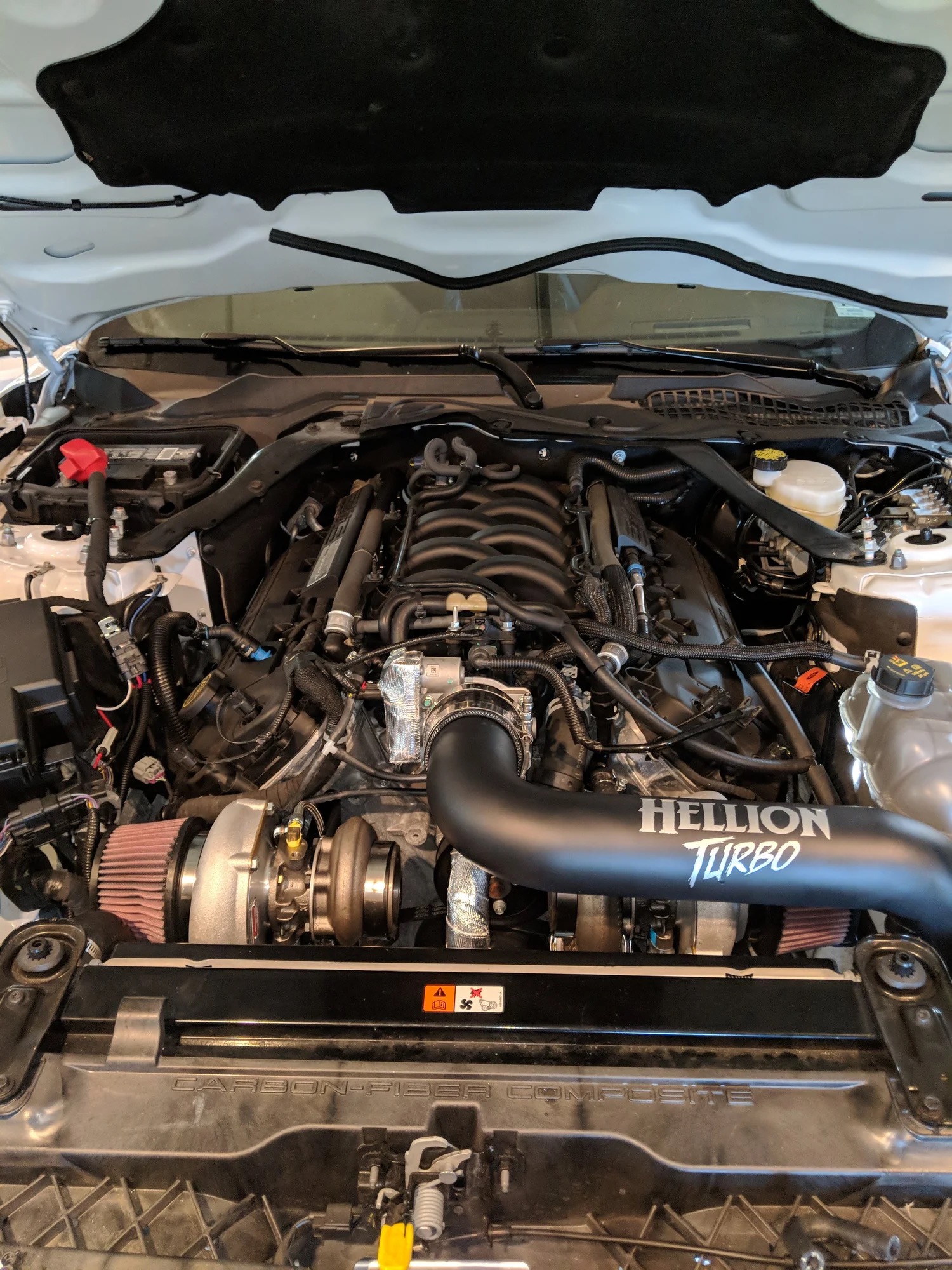
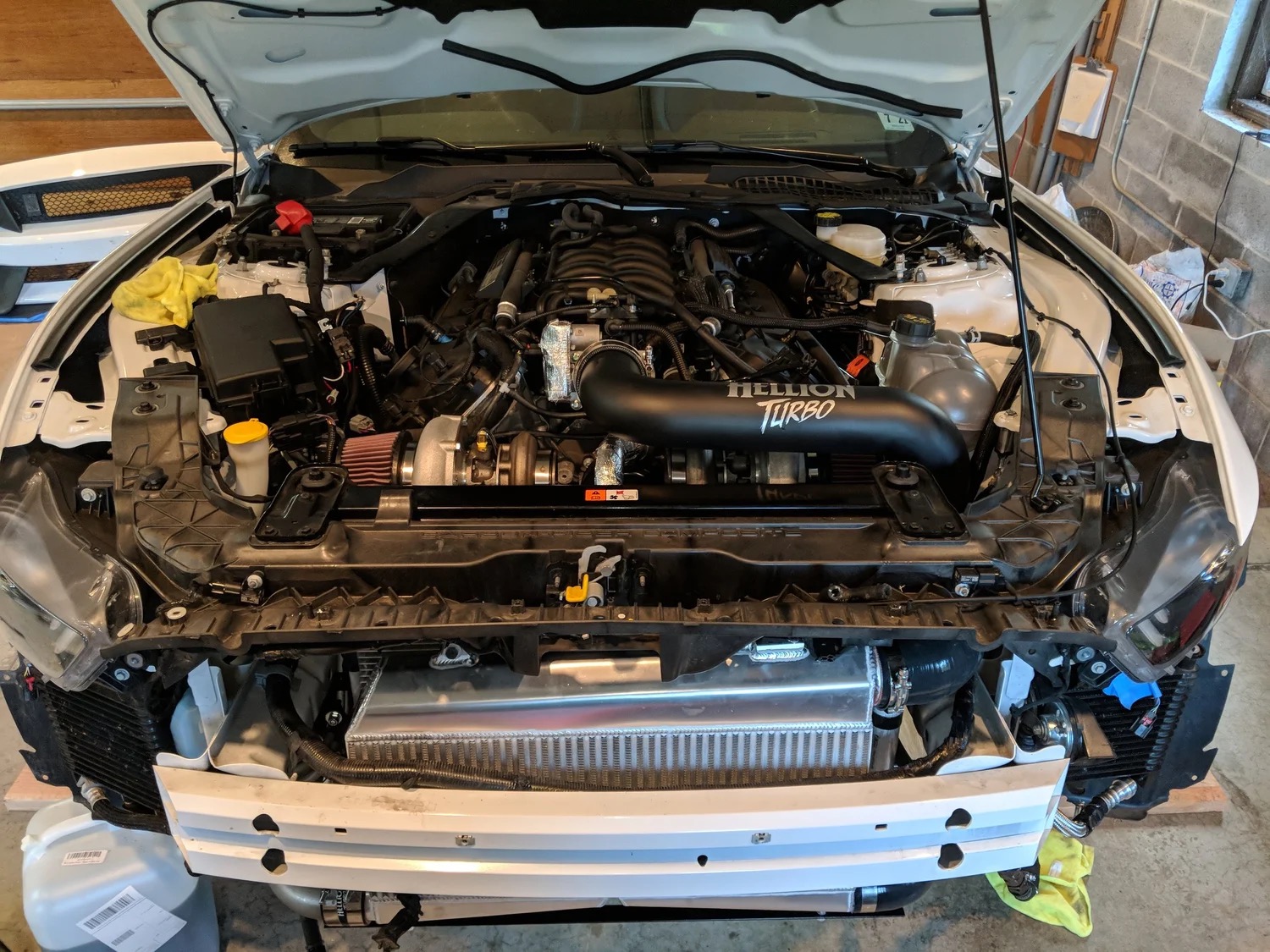
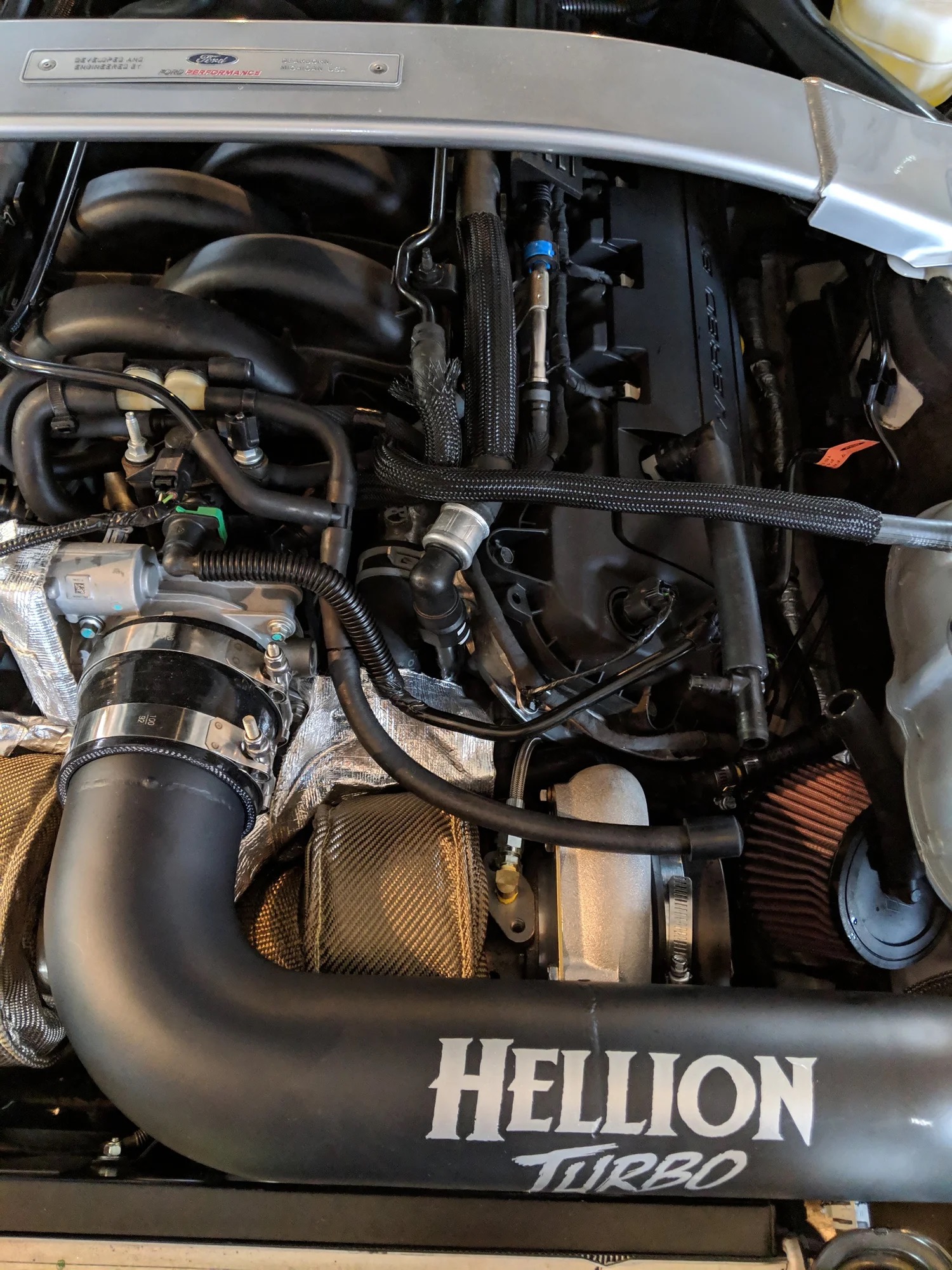
The Hellion system supplied the architecture: two top-mounted turbos, an intercooler, upgraded injectors, an AEM wideband, and an electronic boost controller. Making all of it coexist with the factory car was the actual job.
The nose, front wheels, liners, underbody panels, and much of the engine bay came apart. Oil and cooler lines had to be routed around the sway bar and up-pipes. Turbo clocking, heat shielding, clamps, wiring, and service access all competed for the same inches.
The real work
Installation is assembly. Troubleshooting is engineering.
Early road tests would not make more than two pounds of boost. The system passed a leak test. The actual culprit was a blow-off valve housing distorted by an overtightened V-band clamp, leaving the valve intermittently stuck open.
Then the boost controller misbehaved. Replacing the clever wire connectors with soldered joints solved it immediately. The build became a series of small, testable theories—and a reminder that the failure is often somewhere other than where the symptom points.
Build ledger
One winter.
A lot of systems.
Twin top-mount turbos, dual blow-off valves, large intercooler, and revised intake plumbing.
95 lb injectors, wideband logging, e-Boost2 control, and a remote street tune from Palm Beach Dyno.
Turbo blankets, wrapped piping, added shielding, and carefully routed oil and cooler circuits.
Factory electronics, tight clearances, serviceability, and road manners all preserved around the new hardware.
The result
Fast was expected. Civilized took the work.
The finished car started, idled, and drove like a street car until the boost arrived. A remote tune from Palm Beach Dyno tied the larger injectors, wideband data, and boost control together without turning normal driving into an event.
The GT350 stayed with me for years after the build. It was sold in 2025—seven years after the project began and long after the garage floor had stopped showing evidence of the winter that made it.
Outcome
Built in 2018.
Sold in 2025.
The car changed hands. The useful part stayed: a detailed record of the packaging decisions, the wrong turns, and the fixes that turned a complicated pile of hardware into a dependable street machine.
Read the original build log ↗